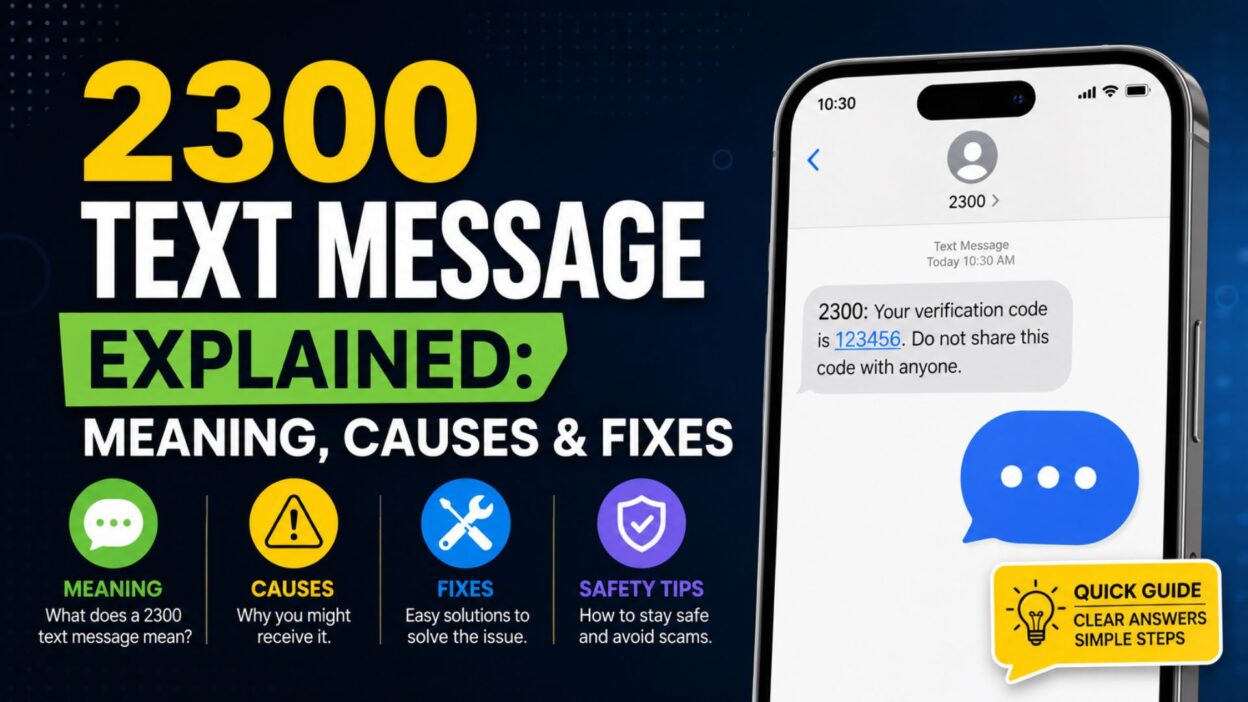
Search Intent: People searching for a 2300 text message usually want to know what the code means, why they received it, whether it’s an error, and how to fix the issue. This guide explains the meaning of a 2300 text message, common causes, troubleshooting steps, and answers to frequently asked questions.
Have you received a 2300 text message and wondered what it means? You’re not alone. Many people are surprised when a message containing the number “2300” appears on their phone, especially if it doesn’t look like a normal text from a friend or family member. In some cases, it may be a service notification, an automated message, a short code used by a business, or a carrier-related alert.
Because text messaging systems vary by mobile carrier, country, and service provider, a 2300 text message doesn’t always have the same meaning. It could be related to account verification, promotional alerts, subscription services, two-factor authentication, or another automated messaging system.
In this guide, you’ll learn what a 2300 text message is, why you may have received one, the most common reasons behind it, and practical steps you can take if you’re unsure whether it’s legitimate. We’ll also cover safety tips, troubleshooting advice, and answers to common questions to help you handle these messages with confidence.
What Is a 2300 Text Message?
A 2300 text message typically refers to an SMS sent from the short code 2300 rather than a standard phone number. Businesses, mobile carriers, banks, retailers, government agencies, and online services often use short codes to send automated messages.
The exact purpose of a message from 2300 depends on the sender. It may include:
- Account verification codes
- One-time passwords (OTP)
- Service notifications
- Appointment reminders
- Promotional offers
- Subscription confirmations
- Security alerts
- Customer support updates
- Payment notifications
- Marketing campaigns
Receiving a text from 2300 doesn’t automatically mean it’s suspicious. However, you should always verify the sender before responding or clicking any links.
Common Reasons You May Receive a 2300 Text Message
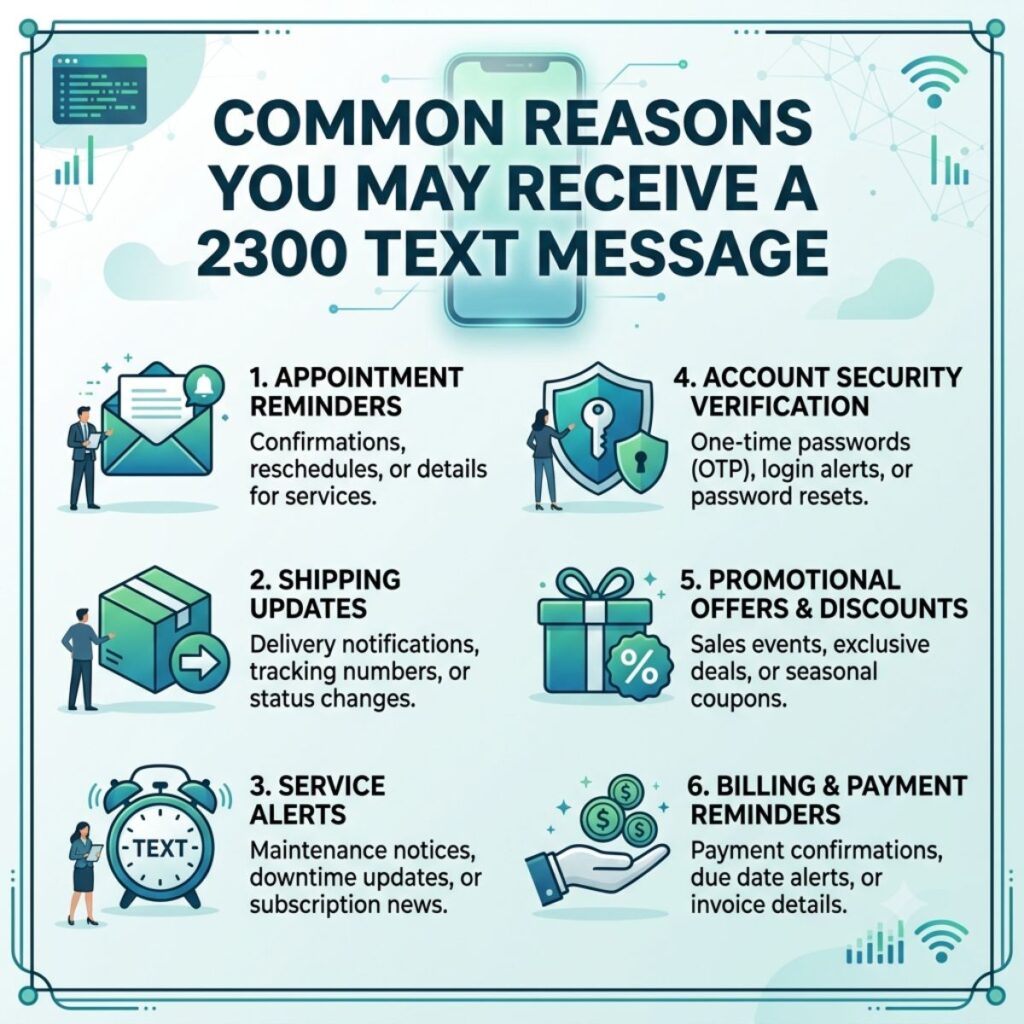
There are several legitimate reasons why a message from the 2300 short code may appear on your phone.
- You requested a verification code.
- You signed in to an online account.
- Your bank sent a security notification.
- A retailer confirmed your order.
- A delivery service shared an update.
- You subscribed to text alerts.
- A healthcare provider sent an appointment reminder.
- Your mobile carrier sent an account notification.
- You received a password reset code.
- A business sent a promotional offer.
Is a 2300 Text Message Safe?
In many cases, yes. Short-code messages are commonly used by legitimate organizations because they’re easier to recognize than random phone numbers.
However, you should stay cautious if the message:
- Asks for passwords or PINs.
- Requests banking information.
- Contains suspicious links.
- Creates a false sense of urgency.
- Promises unrealistic prizes.
- Comes from a service you don’t recognize.
- Requests payment immediately.
- Contains spelling or grammar mistakes.
- Asks you to install software.
- Requests personal information.
If anything seems unusual, contact the company directly using its official website or customer support number instead of replying to the message.
How to Verify a 2300 Text Message
Before taking any action, spend a minute verifying the message.
- Check whether you recently requested a verification code.
- Read the message carefully.
- Confirm the company name.
- Compare it with previous legitimate texts.
- Visit the company’s official website.
- Contact customer support if you’re unsure.
- Avoid clicking unfamiliar links.
- Never share verification codes.
- Ignore unexpected payment requests.
- Delete obvious spam messages.
How to Fix Issues Related to a 2300 Text Message
If you’re having trouble with a 2300 text message, don’t worry. In many cases, the issue is temporary and can be resolved with a few simple troubleshooting steps.
- Check that your phone has a strong mobile signal.
- Restart your device and wait a few minutes.
- Make sure Airplane Mode is turned off.
- Verify that your SIM card is working properly.
- Confirm your mobile number is entered correctly on the service you’re using.
- Ensure SMS messaging hasn’t been blocked on your phone.
- Update your phone’s operating system if an update is available.
- Clear your messaging app’s cache if you’re using Android.
- Ask the sender to resend the verification or confirmation message.
- Contact your mobile carrier if messages continue to fail.
Most SMS delivery issues are caused by network delays, incorrect phone numbers, temporary carrier outages, or blocked short codes.
Why You Might Not Receive a 2300 Text Message
Sometimes the problem isn’t the message itself—it’s that the expected text never arrives.
Here are some common reasons:
- Temporary network congestion.
- Poor cellular coverage.
- Your inbox is full.
- Short-code messages are blocked.
- Do Not Disturb settings are interfering.
- Incorrect phone number on your account.
- Carrier filtering or spam protection.
- Delayed message delivery.
- Problems with the sender’s messaging service.
- A temporary outage affecting SMS delivery.
If you’ve waited more than a few minutes, request a new verification code instead of using an expired one.
Can You Reply to a 2300 Text Message?
It depends on the type of message.
Many short-code messages are one-way notifications and don’t accept replies. Others allow simple responses such as:
- STOP
- START
- HELP
- YES
- NO
- CONFIRM
- CANCEL
Only reply if the message clearly instructs you to do so and you recognize the sender. If you’re unsure who sent the message, avoid responding until you’ve verified its legitimacy.
Tips to Stay Safe with Short-Code Text Messages
Following a few basic safety habits can help protect your personal information.
- Never share one-time passwords with anyone.
- Don’t click links from unexpected messages.
- Verify the sender before replying.
- Ignore messages asking for passwords.
- Enable two-factor authentication on important accounts.
- Keep your phone updated with the latest software.
- Report spam messages to your carrier.
- Delete suspicious texts after reporting them.
- Use official apps instead of unknown links.
- Contact the company directly if something doesn’t seem right.
Common Situations Where You May Receive a 2300 Text Message
A message from the 2300 short code can appear in many everyday situations.
- Signing in to your online banking account.
- Creating a new social media profile.
- Resetting a forgotten password.
- Confirming an online purchase.
- Scheduling a medical appointment.
- Tracking a package delivery.
- Receiving a mobile carrier notification.
- Verifying a new device.
- Confirming a subscription service.
- Receiving a promotional text after opting in.
Knowing these situations makes it easier to recognize whether the message is expected or unusual.
Myths About 2300 Text Messages
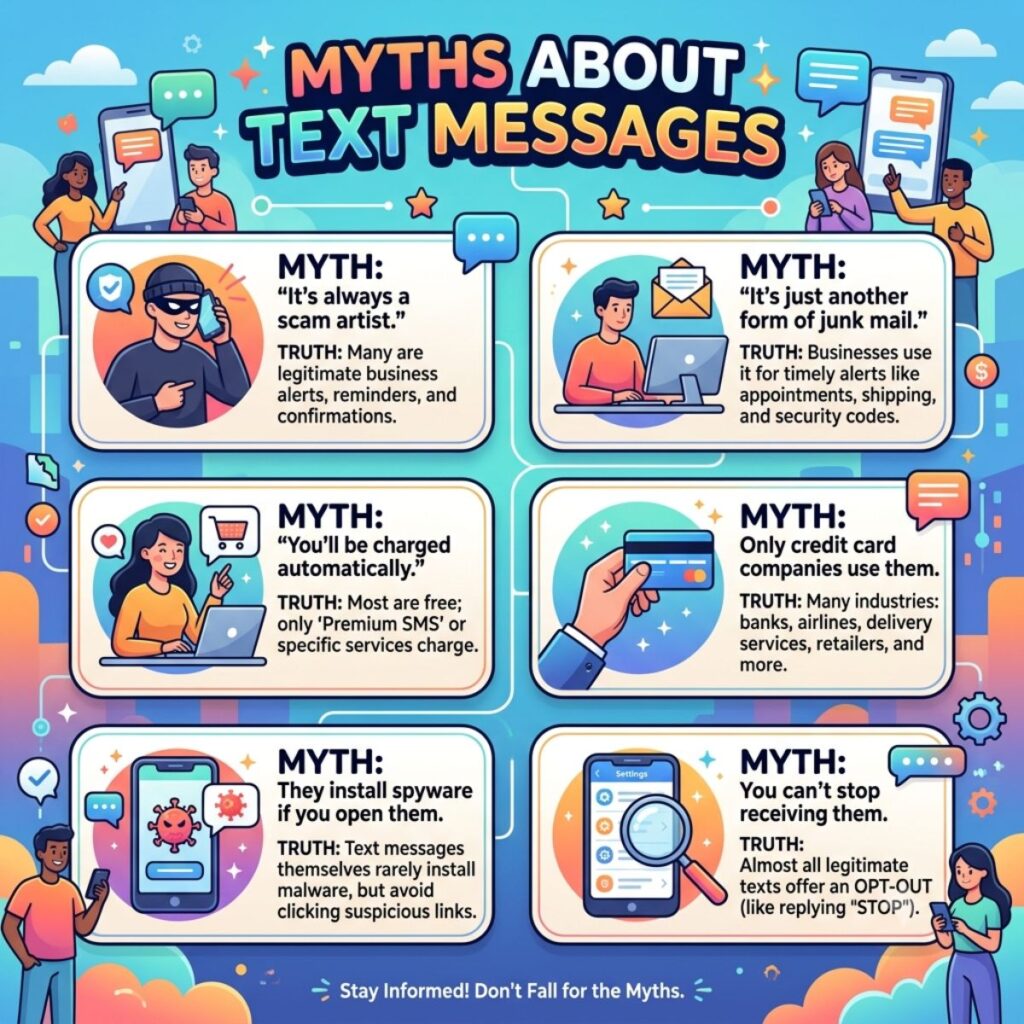
There are many misconceptions surrounding short-code text messages. Let’s clear up a few common ones.
- Myth: Every 2300 text message is spam. Fact: Many are legitimate messages sent by trusted organizations.
- Myth: Opening a text message infects your phone. Fact: Simply opening an SMS is generally not enough to infect a device. The greater risk comes from interacting with suspicious links or attachments.
- Myth: You should reply to every verification text. Fact: Most verification messages don’t require a reply.
- Myth: Short codes are only used for advertising. Fact: Banks, healthcare providers, delivery companies, and many other organizations use short codes for important notifications.
- Myth: Deleting the message cancels your account. Fact: Deleting a text message only removes it from your device.
Frequently Asked Questions
What does a 2300 text message mean?
A 2300 text message is usually an SMS sent from the short code 2300 instead of a regular phone number. It may be used for account verification, security alerts, appointment reminders, promotional messages, or other automated notifications. The exact meaning depends on the organization that sent it.
Is a 2300 text message legitimate?
It can be. Many trusted businesses, banks, mobile carriers, healthcare providers, and online services use short codes to send automated text messages. If you weren’t expecting the message, verify the sender before clicking links or replying.
Should I reply to a 2300 text message?
Only if the message clearly asks you to reply and you recognize the sender. Many short-code messages are one-way notifications and don’t accept replies. If you’re unsure who sent it, contact the company through its official website or customer support.
Why am I not receiving a 2300 verification text?
Verification texts may be delayed because of poor network coverage, carrier filtering, an incorrect phone number, blocked short codes, or temporary service outages. Restart your phone, check your signal, and request a new verification code if needed.
Can I block messages from 2300?
Yes, you can usually block short-code messages through your phone’s messaging app or by contacting your mobile carrier. However, be aware that blocking them may prevent you from receiving important verification codes, account alerts, or security notifications.
Conclusion
Receiving a 2300 text message can be confusing at first, especially if it arrives unexpectedly. In most cases, messages from the 2300 short code are legitimate automated texts used for verification, security alerts, appointment reminders, account updates, or promotional notifications. The exact purpose depends on the company or service that sent the message.
Before responding, take a moment to verify the sender and carefully read the contents. Avoid clicking unfamiliar links, sharing one-time passwords, or providing personal information unless you’re certain the message is genuine. If you’re expecting a verification code and it doesn’t arrive, simple troubleshooting steps—such as checking your network connection or requesting a new code—often resolve the issue.
Understanding how short-code messaging works helps you recognize legitimate notifications, avoid scams, and protect your personal information. By staying cautious and following basic mobile security practices, you can confidently handle future 2300 text messages without unnecessary worry.

Awais Bilal is the author of Messagesfy, sharing simple and meaningful messages, quotes, and wishes to help people express their feelings easily.