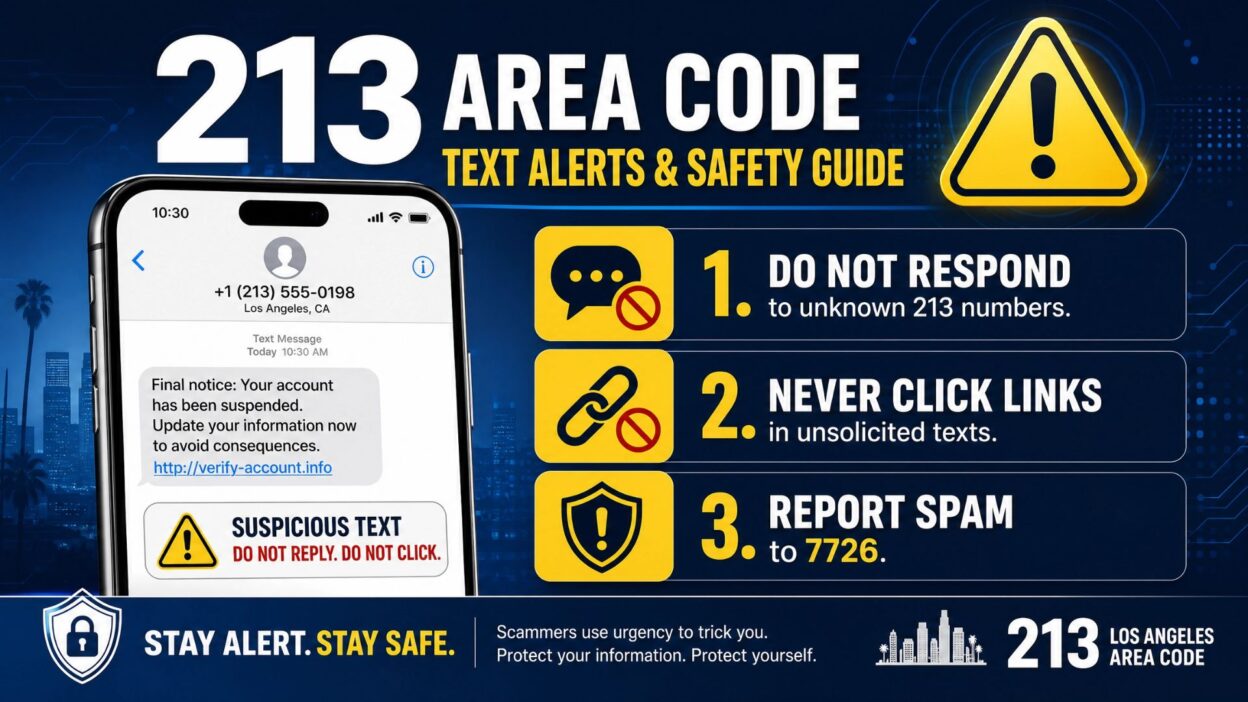
Getting a text from an unknown number can instantly raise questions, especially when it comes from a familiar-looking area code like 213. Many users search for “213 area code text message” because they want to know if it is real, spam, or part of a scam attempt. The 213 area code is linked with Los Angeles, California, which often makes these messages appear more trustworthy at first sight.
However, in reality, scammers frequently exploit well-known area codes to make their messages look legitimate. As a result, people may unknowingly click harmful links or share personal information. Because of this growing issue, it has become important to understand how these messages work and how to respond safely. In this guide, we will clearly break down common 213 area code text messages and help you identify which ones are risky and which can be ignored.
Top 213 Area Code Text Messages
To begin with, these are some of the most commonly reported message patterns linked with the 213 area code. Although they may look official, they are often designed to mislead users.
- Your package delivery is on hold. Confirm details to continue shipping.
- Urgent alert: suspicious login detected on your account.
- You have been selected for a limited-time reward offer.
- Your bank account access is temporarily restricted. Verify now.
- Missed delivery attempt: reschedule immediately using this link.
- Final notice regarding unpaid toll charges. Pay today.
- Your Netflix subscription has been suspended due to payment failure.
- Security warning: unusual activity detected on your profile.
- Congratulations, you have won a cash prize claim now.
- Your email account requires urgent verification.
- Important update: confirm your identity to avoid suspension.
- Refund is available for your recent transaction. Click to process.
- Alert: your device may be at risk. Install update immediately.
- Social Security record mismatch detected. Verify details now.
- Account locked due to suspicious activity. Restore access.
These messages often create urgency so that users react quickly without verifying authenticity.
Short 213 Area Code Text Messages
At the same time, many scam attempts use very short and direct messages to grab attention instantly. These messages feel normal but can still be risky.
- Urgent action required immediately.
- Verify your account now.
- Suspicious login detected.
- Delivery issue needs attention.
- Payment update required.
- Account temporarily locked.
- Security alert triggered.
- Confirm your identity today.
- Refund available now.
- Unusual activity found.
- Click to verify details.
- Final notice sent.
- Prize claimed successfully.
- Update billing information.
- Access restricted temporarily.
Short messages are especially dangerous because they look like routine notifications, even though they are often fake.
Best 213 Area Code Messages for Sharing
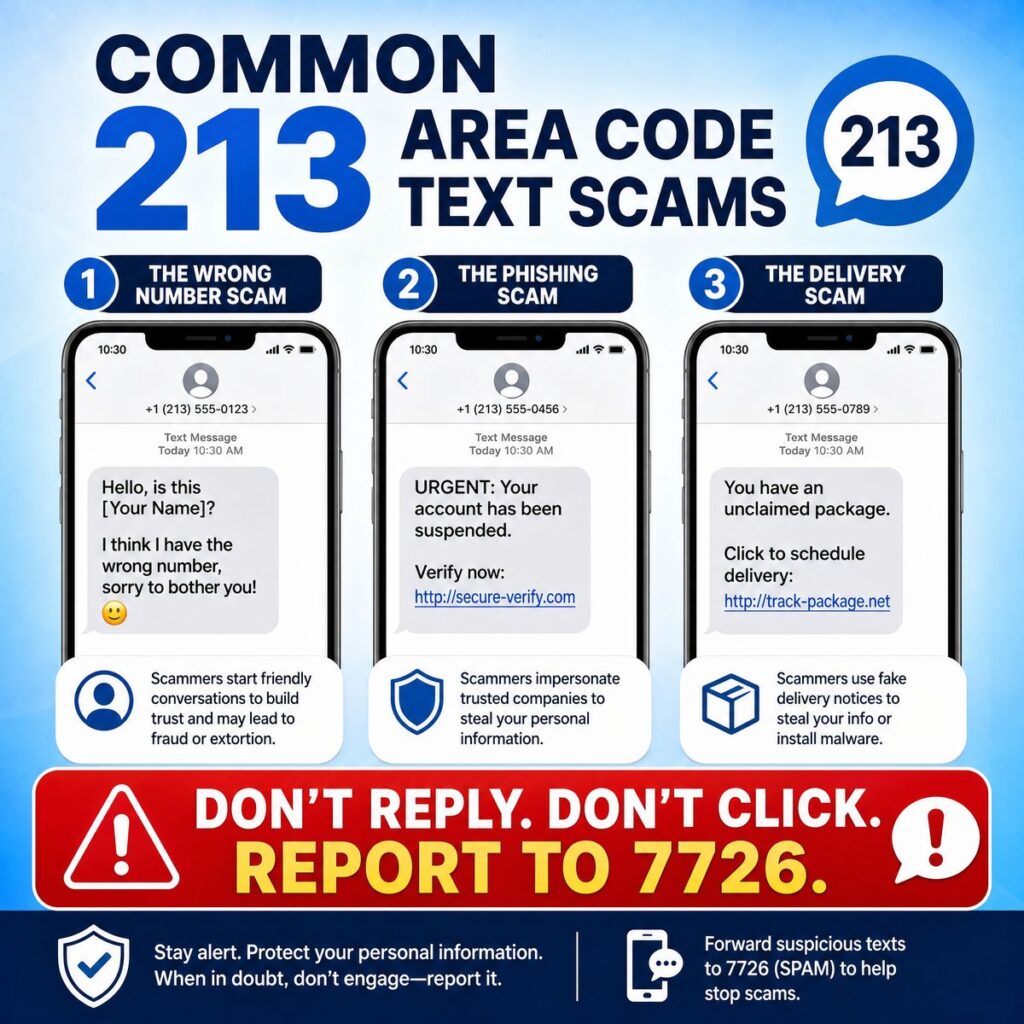
In addition, these examples are useful for awareness and can help others avoid falling into scam traps. Sharing such information increases digital safety.
- Always verify unknown 213 messages before taking action.
- Legitimate companies never ask for sensitive data via SMS links.
- If a message creates panic, it is likely designed to trick you.
- Avoid clicking links from unknown or unexpected texts.
- Confirm delivery updates directly from official websites.
- Scammers rely on urgency to manipulate users quickly.
- Never share OTPs or banking details through text messages.
- Block suspicious numbers and report them immediately.
- Unexpected prize messages are usually scams.
- Contact official support instead of replying to unknown SMS.
- Real institutions do not pressure users to act instantly.
- Always check links carefully before opening them.
- Awareness helps prevent most text message scams.
- Use official apps instead of SMS links for verification.
- Delete suspicious messages without interacting.
One-Line 213 Area Code Messages
Finally, these one-line warnings are commonly used to quickly spread awareness about scam patterns.
- 213 area code messages are often used in phishing scams.
- Not every local number guarantees a safe message.
- Scammers use urgency to trigger fast reactions.
- Always verify SMS links before clicking them.
- Unknown texts should be treated with caution.
- Fake alerts often mimic trusted services.
- Protect your data by ignoring suspicious messages.
- Area code alone does not confirm authenticity.
- Report spam messages to your mobile provider.
- Never share personal details via SMS.
213 Area Code Text Message: Scam Patterns & Real Risks Explained
After understanding the basic meaning of 213 area code text messages, it becomes even more important to look deeper into how these messages actually work. Many users assume that a familiar U.S. area code automatically means the message is safe, but that is not always true. In fact, scammers often rely on this exact assumption to trick people into responding.
Because the 213 area code is associated with Los Angeles, it is frequently used in both legitimate and fake communications. However, fraudulent messages are far more common than people expect. As a result, users may unknowingly expose personal data or click harmful links. To stay protected, it is necessary to recognize patterns, understand intentions, and respond carefully. In this section, we will explore how these messages operate and what warning signs you should never ignore.
Top 213 Area Code Scam Message Patterns
To begin with, scammers usually follow repeatable patterns that are designed to create urgency, fear, or curiosity. Although wording may change, the intent stays the same.
- Your bank account has been temporarily suspended due to suspicious activity.
- We detected unusual login attempts on your account from a new device.
- Your package cannot be delivered until you confirm your address.
- A refund has been issued, but you must verify to receive it.
- Your payment method failed and immediate update is required.
- You have been selected for a government relief program. Apply now.
- Your toll payment is overdue and penalties will apply.
- Security alert: unauthorized access detected on your account.
- Your email storage is full, verify now to avoid deletion.
- You have received a confidential message, open immediately.
- Account verification required to continue using services.
- Your subscription has expired and needs urgent renewal.
- Warning: malware detected on your device. Install update.
- Identity mismatch found in your records, verify details now.
- Your benefits claim is pending approval confirmation required.
These messages are carefully written to push users into quick action without thinking critically.
Short 213 Area Code Scam Alerts
In many cases, scammers prefer short messages because they feel less suspicious and more like automated system alerts. This makes users more likely to trust them.
- Immediate verification required for your account.
- Suspicious activity detected, act now.
- Delivery attempt failed, reschedule instantly.
- Your account access is restricted.
- Payment update required immediately.
- Security alert issued on your profile.
- Confirm identity to avoid suspension.
- Unusual login attempt blocked.
- Refund processing waiting approval.
- Final warning issued today.
- Click link to restore access.
- Account locked for safety reasons.
- Prize notification requires action.
- Billing issue must be resolved.
- System update required now.
Because these messages are brief, they often bypass a user’s natural suspicion.
Best Safety-Focused 213 Area Code Messages
Moreover, understanding safety reminders can help reduce the risk of falling for scams. These messages are often shared to build awareness.
- Always verify 213 area code messages before responding.
- Do not trust urgent requests for personal information.
- Legitimate organizations never demand instant action via SMS.
- Avoid clicking unknown links in text messages.
- Check official websites instead of message links.
- Scammers often pretend to be banks or delivery services.
- Never share passwords or OTP codes via SMS.
- Report suspicious messages to your mobile carrier.
- Delete messages that feel suspicious or urgent.
- Use official apps for account verification instead of links.
- Be cautious of unexpected prize notifications.
- Confirm any financial alerts directly with your bank.
- Awareness is the strongest protection against SMS scams.
- Do not respond to unknown international or area code texts.
- When in doubt, ignore and block the sender.
One-Line 213 Area Code Safety Messages
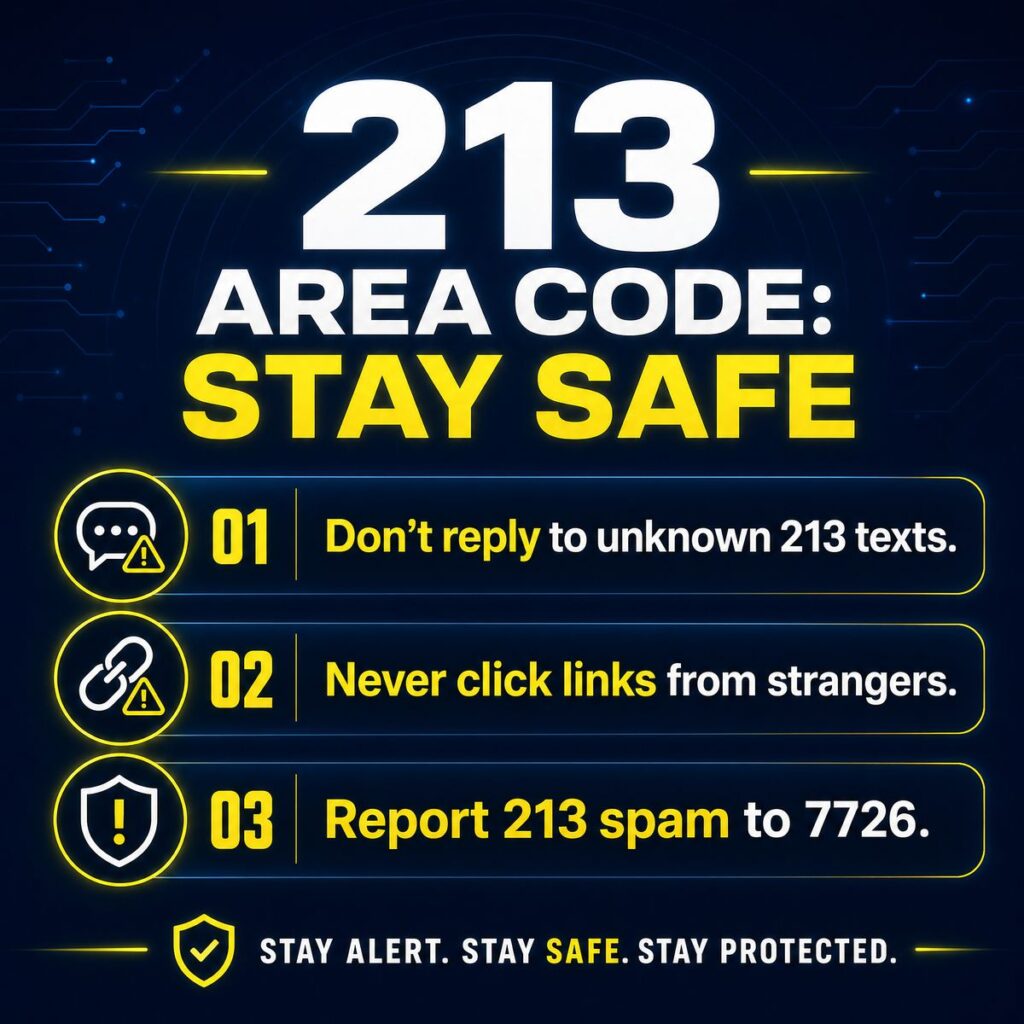
Finally, these short awareness lines help summarize key safety habits in a simple way.
- 213 area code texts are commonly used in scam attempts.
- Area code does not guarantee message authenticity.
- Always verify before clicking SMS links.
- Scammers rely on urgency to mislead users.
- Fake alerts often mimic trusted companies.
- Unknown messages should never be trusted instantly.
- Protect personal data by ignoring suspicious texts.
- Report spam messages whenever possible.
- Never share sensitive details through SMS.
- Caution is the best defense against text scams.a
213 Area Code Text Message: Safety Tips, FAQs & Final Guide
As we continue exploring 213 area code text messages, it becomes clear that awareness is the strongest protection against scams. While earlier sections explained common patterns and risks, the final part focuses on practical safety habits, frequently asked questions, and a clear conclusion. Since scammers constantly change their tactics, staying informed helps you react calmly instead of emotionally.
Although a message may appear to come from a trusted U.S. area code like 213, it still might not be legitimate. Therefore, recognizing red flags and knowing how to respond can prevent financial loss and data theft. In this final section, we will focus on real-world precautions, common doubts, and simple actions that keep your personal information safe.
Best Messages for Captions (Awareness & Sharing)
To begin with, these caption-style lines are widely used for awareness posts and social sharing about scam safety.
- Think before you click any 213 area code text message.
- Not every local number means a safe message.
- Scammers hide behind familiar area codes.
- One click can risk your personal data.
- Always verify before trusting SMS alerts.
- Urgency in messages is often a warning sign.
- Protect yourself by ignoring unknown links.
- Awareness can stop most text scams.
- Real companies do not rush your decisions.
- Stay alert, stay safe from fake messages.
- Your data is valuable—protect it wisely.
- Never trust random prize notifications.
- Safety starts with checking before acting.
- Unknown messages deserve extra caution.
- Smart users always verify first.
Copy-Paste Ready 213 Area Code Messages
In addition, here are simple ready-to-use awareness messages you can share with others instantly.
- If you receive a 213 area code text message, do not click any link without verification.
- Be careful: scammers often use local area codes to appear trustworthy.
- Never share OTP or banking details through SMS messages.
- Always confirm suspicious alerts directly from official websites.
- Do not respond to urgent or threatening text messages.
- Block and report unknown 213 area code numbers immediately.
- Treat unexpected prize messages as potential scams.
- Avoid opening links from unknown senders.
- Your safety is more important than any message urgency.
- When unsure, delete the message without replying.
- Scammers rely on fear and urgency to trick users.
- Real companies never ask for passwords via SMS.
- Stay cautious with every unexpected text message.
- Verify first, act later—that’s the safest approach.
- Awareness helps protect everyone around you.
FAQs About 213 Area Code Text Messages
What is a 213 area code text message?
It is a message sent from a number registered under the 213 area code, which is linked to Los Angeles, California.
Are all 213 area code texts scams?
No, not all are scams, but many reported cases involve spam or phishing attempts.
Why do scammers use the 213 area code?
They use it because it looks familiar and increases the chances of users trusting the message.
What should I do if I receive a suspicious message?
Avoid clicking any links, do not reply, and block or report the number immediately.
Can clicking a link in these messages harm my phone?
Yes, it may lead to phishing sites or malware designed to steal personal data.
Conclusion
In conclusion, 213 area code text messages can be both legitimate and suspicious, but caution is always necessary. Since scammers often disguise themselves using familiar area codes, it is important not to rely on appearance alone. Instead, focus on behavior patterns such as urgency, unclear requests, and suspicious links.
By staying alert and following simple safety habits, you can easily avoid most text-based scams. Moreover, sharing awareness with others helps create a safer digital environment for everyone. Ultimately, your best defense is awareness, verification, and careful action whenever you receive an unexpected message.

Awais Bilal is the author of Messagesfy, sharing simple and meaningful messages, quotes, and wishes to help people express their feelings easily.