Sometimes typing a long message simply takes too much time. Whether you’re driving, walking, cooking, or just want your voice to add a personal touch, audio messages make communication faster and more natural. Many iPhone users discover the voice message feature but aren’t always sure how to use it correctly.
If you have ever wondered how to send audio message on iPhone, the process is actually very simple. The Messages app allows users to record and send voice messages within seconds, making conversations feel more personal and convenient.
Audio messages are especially useful when emotions, tone, or detailed explanations matter. Instead of typing several paragraphs, you can simply record your voice and send it instantly.
This guide explains how to send audio messages on iPhone, common situations where voice messages help, and simple tips that make the feature easier to use. Whether you’re new to iPhone or just exploring its messaging features, these examples will help you get started.
Top How to Send Audio Message on iPhone Examples
These examples explain the basic process of sending voice messages.
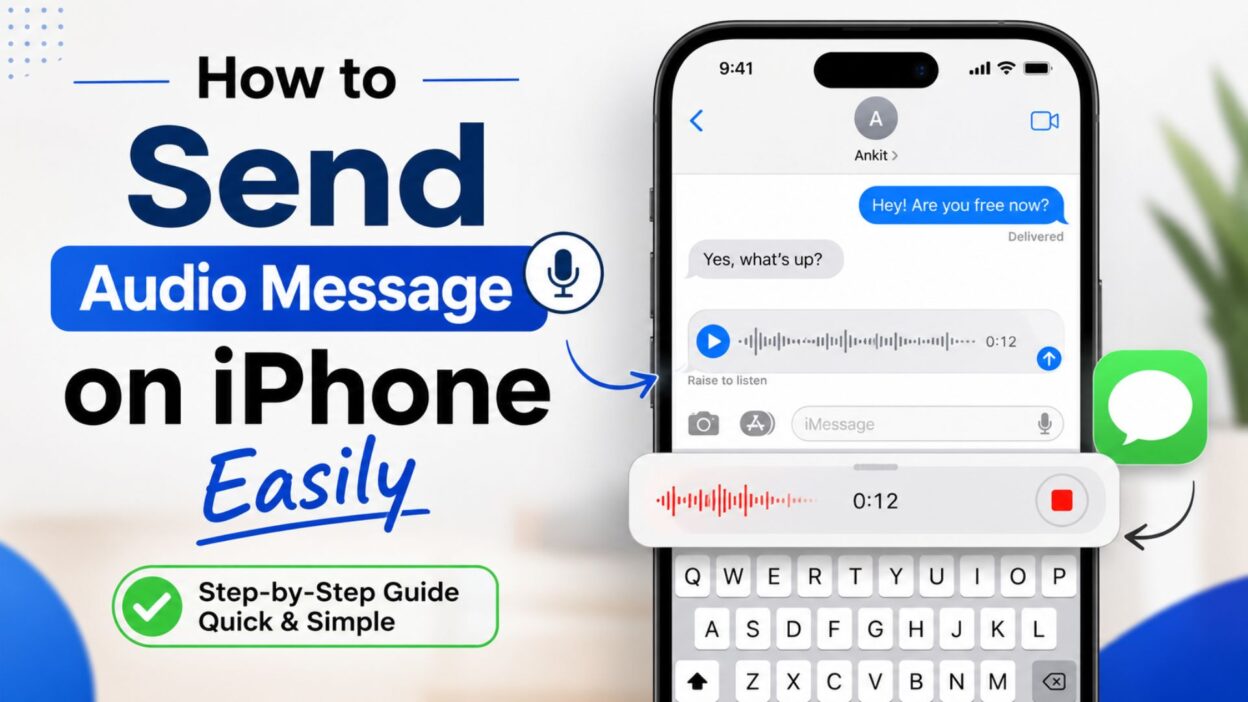
- Open the Messages app and select a conversation.
- Tap the audio recording icon beside the text box.
- Press and hold the microphone button.
- Speak your message clearly.
- Release the button when finished.
- Tap send to deliver the audio message.
- Listen to the recording before sending.
- Delete the recording if necessary.
- Audio messages make conversations feel personal.
- Voice messages save typing time.
- iPhone makes audio recording simple.
- Audio messages capture emotions better.
- Short recordings are easier to understand.
- Speak naturally while recording.
- Background noise should be minimized.
- Keep your microphone uncovered.
- Review the message before sending.
- Voice messages work well for long explanations.
- Audio messages help when typing is difficult.
- iPhone supports quick voice communication.
Short How to Send Audio Message on iPhone Messages
These quick tips make the process easy to remember.
- Open Messages and select a chat.
- Tap the microphone icon.
- Hold to record.
- Speak clearly.
- Release to stop recording.
- Tap send.
- Review before sending.
- Keep messages short.
- Minimize background noise.
- Use the built-in microphone.
- Audio messages save time.
- Voice adds personality.
- Recording is simple.
- iPhone makes it easy.
- Speak naturally.
- Send instantly.
- Retry if needed.
- Check your volume.
- Listen before sending.
- Enjoy voice messaging.
Best How to Send Audio Message on iPhone Tips for Sharing
These helpful tips can be shared with other iPhone users.
- Open the Messages app before recording.
- Make sure your microphone is working properly.
- Hold the phone close while speaking.
- Speak clearly for better audio quality.
- Record in a quiet environment.
- Keep voice messages short and clear.
- Review recordings before sending.
- Delete mistakes and try again.
- Update your iPhone if problems occur.
- Restart the Messages app if necessary.
- Check microphone permissions.
- Ensure your internet connection is stable.
- Use voice messages for detailed explanations.
- Audio messages feel more personal.
- Practice using the feature regularly.
- Keep background noise to a minimum.
- Use headphones if necessary.
- Voice messages save typing effort.
- Audio messages add emotion to conversations.
- iPhone makes voice messaging convenient.
One-Line How to Send Audio Message on iPhone Tips
These one-line tips provide quick answers.
- Open Messages and tap the microphone.
- Hold the button to record.
- Release when finished speaking.
- Tap send to share your message.
- Speak clearly while recording.
- Keep messages short.
- Review before sending.
- Avoid noisy environments.
- Voice messages save time.
- Audio adds personality.
- Check your microphone.
- Update your iPhone regularly.
- Use Messages for voice notes.
- Record naturally.
- Send instantly.
Common Problems When Sending Audio Messages on iPhone
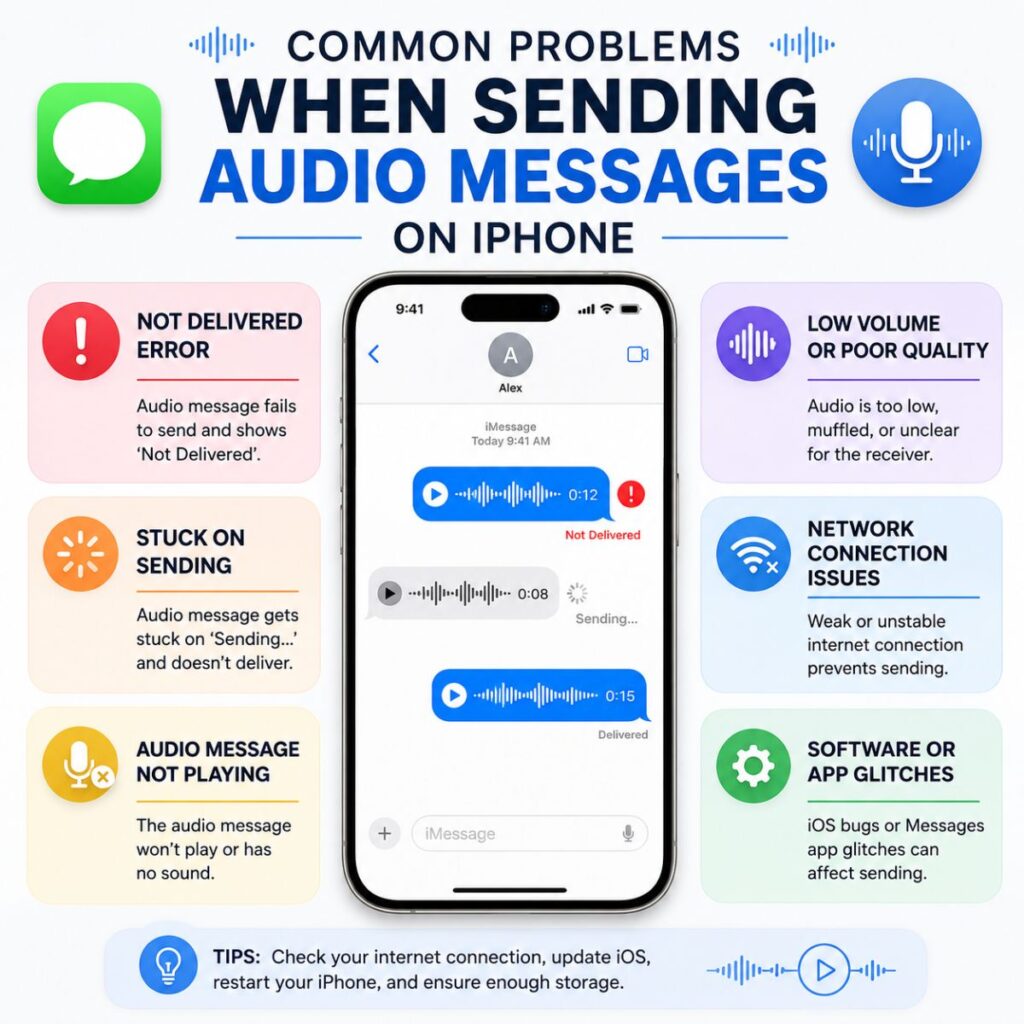
Sometimes users face issues while trying to send voice messages. These are the most common reasons.
- Microphone permission is not enabled for Messages.
- iPhone microphone may be blocked or covered.
- Low storage can interrupt audio recording.
- Poor internet connection may delay sending.
- Messages app may need a restart.
- iOS software bugs can affect voice messages.
- Bluetooth devices may redirect audio input.
- Dirty or damaged microphone can reduce sound quality.
- Background noise may affect recording clarity.
- App glitches can stop recording suddenly.
- Outdated iOS version may cause errors.
- Restrictions settings may block microphone access.
- Weak signal can interrupt message delivery.
- App cache issues may affect performance.
- Multiple apps using microphone can cause conflict.
- Device overheating may slow functions.
- Incorrect audio settings may disrupt recording.
- Do Not Disturb mode may affect notifications.
- Temporary system lag can cause delays.
- Restart often fixes minor issues.
Easy Fixes for Audio Message Issues on iPhone
These simple solutions usually solve most problems quickly.
- Check microphone permissions in Settings.
- Restart the Messages app.
- Reboot your iPhone.
- Update iOS to the latest version.
- Clean your microphone area gently.
- Disconnect Bluetooth devices.
- Free up storage space on your device.
- Switch to a stable internet connection.
- Reset network settings if needed.
- Close background apps.
- Try recording again in a quiet place.
- Disable Do Not Disturb temporarily.
- Check audio input settings.
- Reinstall the Messages app (if needed).
- Ensure your microphone is not blocked.
- Remove phone case if blocking sound.
- Test microphone using Voice Memos.
- Log out and back into iCloud.
- Allow Messages full permissions.
- Contact Apple support if issue continues.
Best Situations to Use Audio Messages on iPhone
Audio messages are not just convenient—they are also more personal in many situations.
- When explaining something long or detailed.
- When typing feels slow or difficult.
- When you want to show emotion in your voice.
- When sending quick updates on the go.
- When driving or multitasking (hands-free use).
- When texting someone close to you.
- When giving instructions clearly.
- When tone matters more than text.
- When responding quickly is important.
- When you want a more personal connection.
- When sharing urgent information.
- When avoiding typing errors.
- When language barriers exist.
- When you are busy but need to reply.
- When sending greetings or wishes.
Best Messages for Captions
These short captions are perfect for social posts or blogs about voice messaging.
- Speak it, don’t type it.
- Voice makes messages real.
- Sometimes words need a voice.
- Talk instead of typing.
- Your voice, your message.
- Communication made personal.
- Say it with sound.
- Messages that feel alive.
- Voice is the new text.
- Talk more, type less.
- Express beyond typing.
- Let your voice connect.
- Simple, fast, personal.
- Speak your thoughts freely.
- Audio brings emotion.
Copy-Paste Ready Audio Message Tips
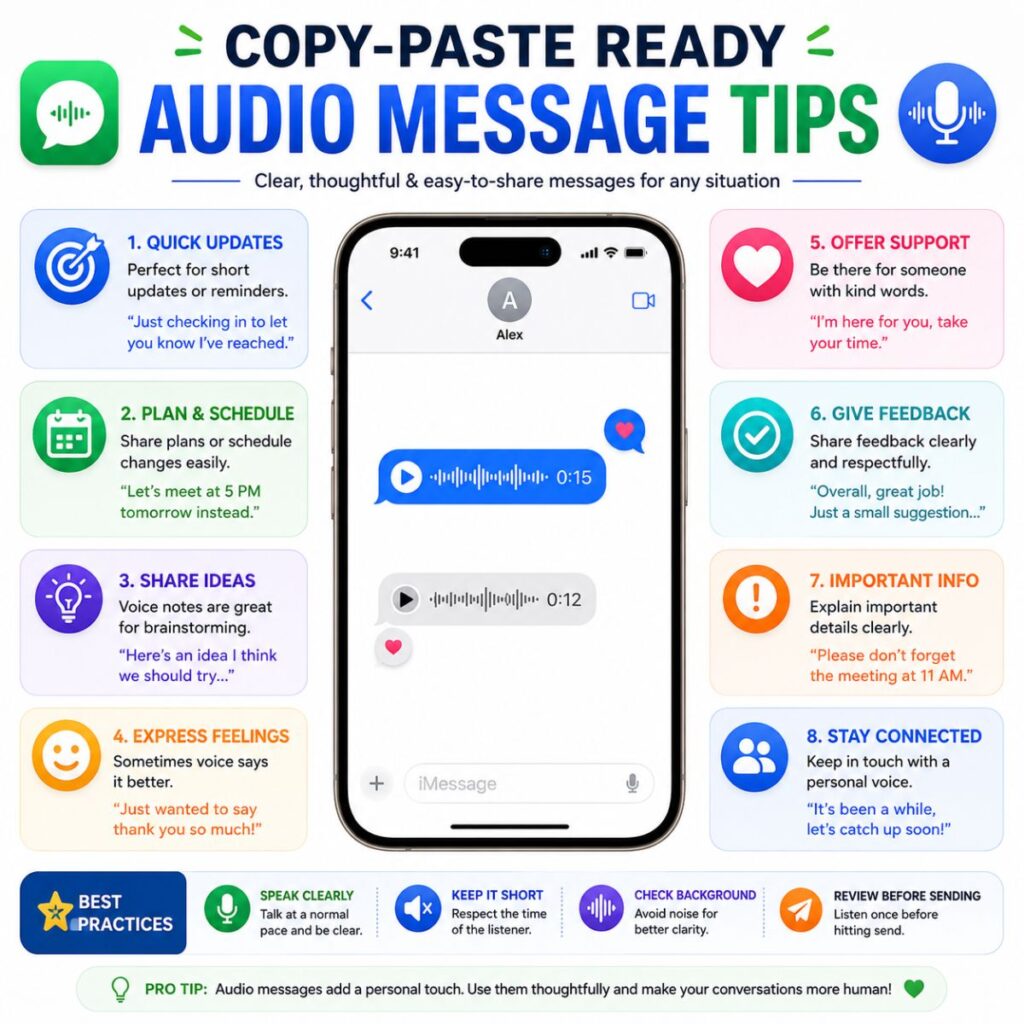
These ready-to-use lines explain voice messaging in a simple way for sharing or learning.
- To send an audio message on iPhone, open Messages, tap a chat, hold the microphone, speak, and release to send.
- Audio messages on iPhone are created by pressing and holding the microphone icon in the Messages app.
- You can record your voice and send it instantly without typing a single word.
- iPhone allows you to send voice messages directly through the Messages app with one tap.
- Hold the mic button, record your message, then tap send to share your voice instantly.
- Voice messages are a faster way to communicate on iPhone.
- The Messages app makes it easy to send short audio clips.
- Simply speak into your iPhone and send your voice as a message.
- Audio messages help you communicate emotions more clearly.
- iPhone voice messaging works even when you don’t want to type.
- You can delete and re-record audio messages before sending.
- Audio messages are useful for quick replies and long explanations.
- Just press, speak, and send—no extra apps needed.
- Voice messages make texting more personal and natural.
- iPhone supports quick and simple voice recording in chats.
Additional Quick Tips
- Make sure microphone access is enabled in settings.
- Speak clearly for better audio quality.
- Keep messages short for easy listening.
- Avoid background noise while recording.
- Use the latest iOS for best performance.
Frequently Asked Questions
How do I send a voice message on iPhone Messages?
Open Messages, choose a chat, hold the microphone icon, record your voice, then release and tap send.
Why can’t I send audio messages on my iPhone?
It may be due to microphone permissions, low storage, poor connection, or a temporary app glitch.
Do I need internet to send audio messages on iPhone?
Yes, you need an internet or cellular connection to send audio messages via iMessage.
Can I delete an audio message before sending?
Yes, you can cancel and re-record before sending it in the Messages app.
Are audio messages saved on iPhone?
Yes, they can be saved depending on your settings, or they may expire after a certain time in iMessage.
Conclusion
Learning how to send audio message on iPhone makes communication faster, easier, and more personal. Instead of typing long texts, you can simply speak and share your thoughts in seconds. This feature is especially useful when you want to express emotion, explain something clearly, or reply quickly while multitasking.
The Messages app on iPhone makes voice messaging simple with just a press-and-hold action. Even if you face small issues like microphone errors or connection problems, they are usually easy to fix with basic troubleshooting steps.
As communication becomes more digital and fast-paced, audio messages help bring a human touch back into conversations. Whether you’re chatting with friends, family, or coworkers, using your voice makes messages feel more real and meaningful.
Save this guide for quick reference and start using voice messages to make your iPhone conversations smoother and more expressive.

Awais Bilal is the author of Messagesfy, sharing simple and meaningful messages, quotes, and wishes to help people express their feelings easily.