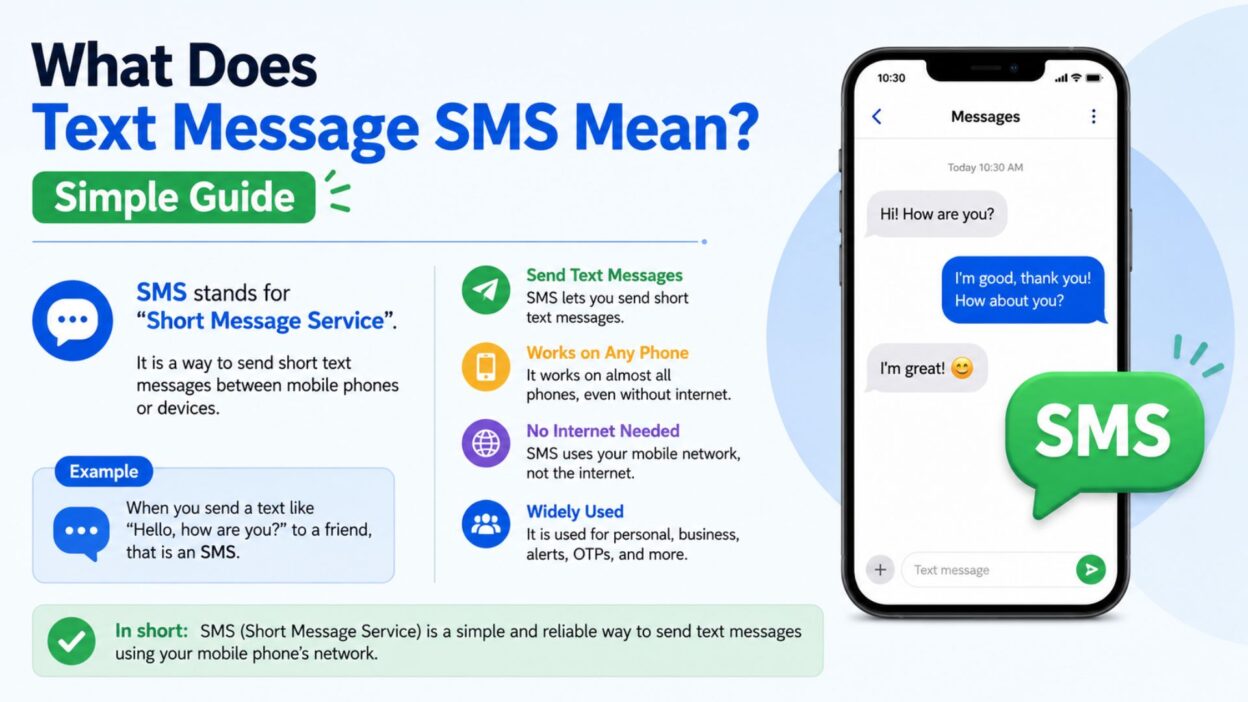
Almost everyone sends text messages every day, yet many people still wonder, what does text message SMS mean? You may have seen the term on your phone, mobile bill, or messaging settings and felt confused about what it actually stands for.
SMS has been part of mobile communication for decades. Even with modern apps like WhatsApp and Messenger, SMS remains one of the most widely used ways to send quick messages. From verification codes to personal conversations, these short messages help people stay connected around the world.
Understanding SMS does not require technical knowledge. The concept is simple, practical, and something most phone users already use without realizing it. This guide explains the meaning of SMS in clear language while providing examples and easy-to-understand definitions.
If you have ever asked yourself what text message SMS means, these explanations will help make everything easier.
Top What Does Text Message SMS Mean Examples
These examples explain SMS in simple and relatable ways.
- SMS stands for Short Message Service.
- SMS is the technology used to send text messages between phones.
- A text message sent without the internet is usually an SMS.
- SMS allows mobile phones to exchange short messages.
- Text messaging and SMS are often used interchangeably.
- SMS messages work through cellular networks.
- Most verification codes arrive through SMS.
- SMS existed before modern messaging apps.
- An SMS usually contains plain text only.
- Mobile carriers deliver SMS messages.
- SMS works even without Wi-Fi.
- Many businesses use SMS for alerts.
- Banking notifications often arrive by SMS.
- Appointment reminders commonly use SMS.
- SMS messages have character limits.
- SMS is supported on nearly every phone.
- Text messages sent through your carrier use SMS.
- SMS remains one of the oldest messaging technologies.
- Emergency alerts often use SMS systems.
- SMS is designed for quick communication.
Short What Does Text Message SMS Mean Messages
These short explanations make SMS easy to understand.
- SMS means Short Message Service.
- SMS is a text message.
- SMS uses mobile networks.
- SMS works without internet.
- SMS sends short texts.
- Phones support SMS.
- SMS is traditional texting.
- SMS connects mobile users.
- SMS delivers quick messages.
- SMS is carrier-based texting.
- SMS works worldwide.
- SMS is simple communication.
- SMS powers text messaging.
- SMS sends written messages.
- SMS remains widely used.
- SMS supports basic phones.
- SMS works on all networks.
- SMS is easy to use.
- SMS delivers notifications.
- SMS helps people stay connected.
Best What Does Text Message SMS Mean Examples for Sharing
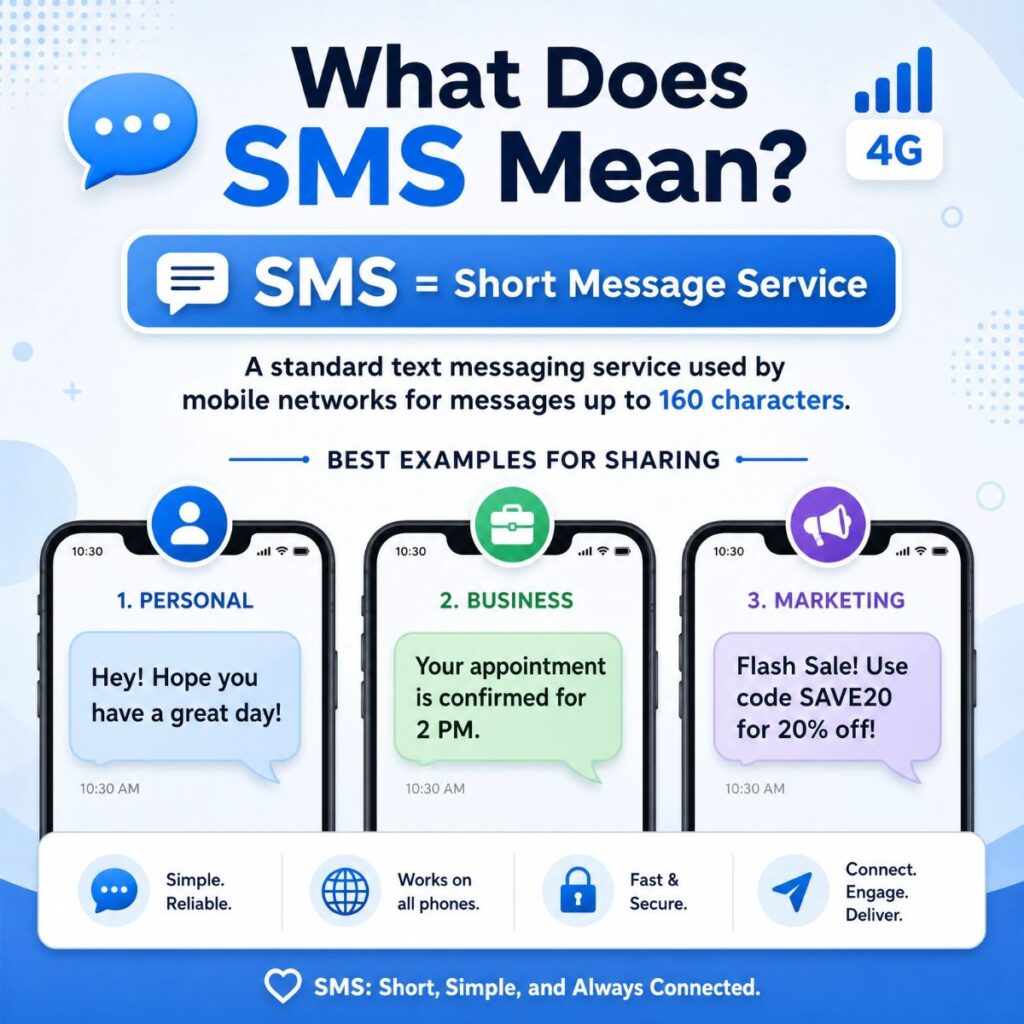
These shareable explanations help readers understand SMS quickly.
- SMS stands for Short Message Service and allows people to exchange text messages.
- SMS is the standard technology behind traditional text messaging.
- Text messages sent through your mobile carrier are called SMS messages.
- SMS allows communication without needing internet access.
- Most phones automatically support SMS messaging.
- SMS messages travel through cellular networks.
- SMS remains useful for alerts and notifications.
- Verification codes often arrive through SMS.
- SMS is one of the oldest forms of mobile messaging.
- Many businesses rely on SMS communication.
- SMS works on smartphones and basic phones.
- SMS messages are usually short and direct.
- Cellular providers manage SMS delivery.
- SMS is available in most countries.
- SMS continues to be widely used today.
- Internet access is not required for SMS.
- SMS helps people communicate quickly.
- Many emergency alerts use SMS systems.
- SMS technology remains reliable.
- Text messaging and SMS often mean the same thing.
One-Line What Does Text Message SMS Mean Messages
These one-line explanations provide quick answers.
- SMS means Short Message Service.
- SMS is traditional text messaging.
- SMS works through mobile networks.
- SMS does not require Wi-Fi.
- SMS allows phones to exchange texts.
- SMS is carrier-based messaging.
- SMS supports quick communication.
- SMS works on nearly every phone.
- SMS is simple and reliable.
- SMS remains widely used today.
- SMS powers basic text messaging.
- SMS delivers short written messages.
- SMS uses cellular technology.
- SMS helps people stay connected.
- SMS is easy to understand.
SMS vs Text Message Examples
Many people use the terms SMS and text message interchangeably. These examples make the difference easier to understand.
- An SMS is a type of text message sent through your mobile carrier.
- Every SMS is a text message, but not every text message is an SMS.
- Messages sent through Wi-Fi apps are usually not SMS.
- SMS uses your cellular network instead of the internet.
- WhatsApp messages are not SMS messages.
- Messenger chats are different from SMS texts.
- SMS works even when internet access is unavailable.
- iMessage can switch to SMS when needed.
- SMS is supported by almost all mobile phones.
- Internet messaging apps require data or Wi-Fi.
- SMS messages are often limited in length.
- Messaging apps support photos, videos, and stickers.
- SMS focuses mainly on plain text communication.
- SMS does not require app installation.
- Mobile carriers handle SMS delivery.
- App messages travel through internet servers.
- SMS remains useful during network issues.
- Texting apps provide more features than SMS.
- SMS is simple and reliable.
- Both methods help people stay connected.
How SMS Messages Work
Understanding how SMS works helps explain why it remains popular.
- Your phone sends the message through your carrier.
- The carrier delivers the message to another phone.
- Internet access is not required.
- SMS uses cellular towers for delivery.
- Messages travel quickly through mobile networks.
- The receiving phone gets the text automatically.
- SMS works on both smartphones and basic phones.
- Most phones include SMS by default.
- Mobile plans often include SMS services.
- SMS can work even with weak internet connections.
- Verification codes commonly use SMS.
- Security alerts often arrive through SMS.
- Businesses use SMS for reminders.
- Airlines send updates through SMS.
- Banks use SMS notifications.
- Schools often use SMS alerts.
- Doctors send appointment reminders by SMS.
- Delivery services use SMS updates.
- Emergency systems use SMS alerts.
- SMS continues to serve millions daily.
Common Examples of SMS Messages
These real-life examples show where SMS appears every day.
- Your bank sends a security code.
- A delivery company confirms your package.
- Your doctor reminds you of an appointment.
- Your school sends an important update.
- A friend sends a quick text.
- A store sends a discount code.
- Your airline sends flight information.
- A website sends a verification code.
- Your mobile carrier sends account updates.
- A company confirms your booking.
- A restaurant sends reservation reminders.
- A service provider sends payment notices.
- A family member checks on you.
- Your employer sends work updates.
- Emergency alerts appear through SMS.
- Password reset codes arrive by SMS.
- Event reminders are sent via SMS.
- Two-factor authentication uses SMS.
- Promotional offers often arrive by SMS.
- Simple conversations happen through SMS.
Best Messages for Captions
These short caption ideas fit technology, communication, and messaging topics.
- Small messages create big connections.
- One text can change a day.
- Communication begins with a message.
- SMS keeps people connected.
- Simple texts carry important words.
- Every message tells a story.
- Technology starts with communication.
- A text message bridges distances.
- Short messages have lasting impact.
- Staying connected starts with a text.
- Communication has never been simpler.
- One message can mean everything.
- Texting keeps the world connected.
- SMS remains timeless.
- Every conversation starts somewhere.
Copy-Paste Ready SMS Meaning Messages
These simple explanations can be shared with friends, family, or anyone asking about SMS.
- SMS stands for Short Message Service, which is the technology used to send text messages between phones.
- A text message sent through your mobile network is usually called an SMS.
- SMS allows people to exchange short messages without using the internet.
- Most basic text messages on phones use SMS technology.
- SMS works through your cellular carrier instead of Wi-Fi.
- Short Message Service is the full meaning of SMS.
- SMS is one of the oldest forms of mobile communication.
- Text messaging and SMS often mean the same thing.
- SMS messages can be sent and received on nearly all mobile phones.
- SMS helps people stay connected even without internet access.
- Many verification codes and alerts are delivered through SMS.
- SMS remains popular because it is simple and reliable.
- Mobile carriers manage the delivery of SMS messages.
- SMS supports quick and easy communication.
- Traditional texting is usually called SMS.
- SMS technology is used around the world.
- Most phones automatically support SMS messaging.
- SMS allows instant communication between devices.
- Text messages sent through a mobile network are known as SMS.
- SMS continues to be an important communication tool.
Additional SMS Meaning Examples
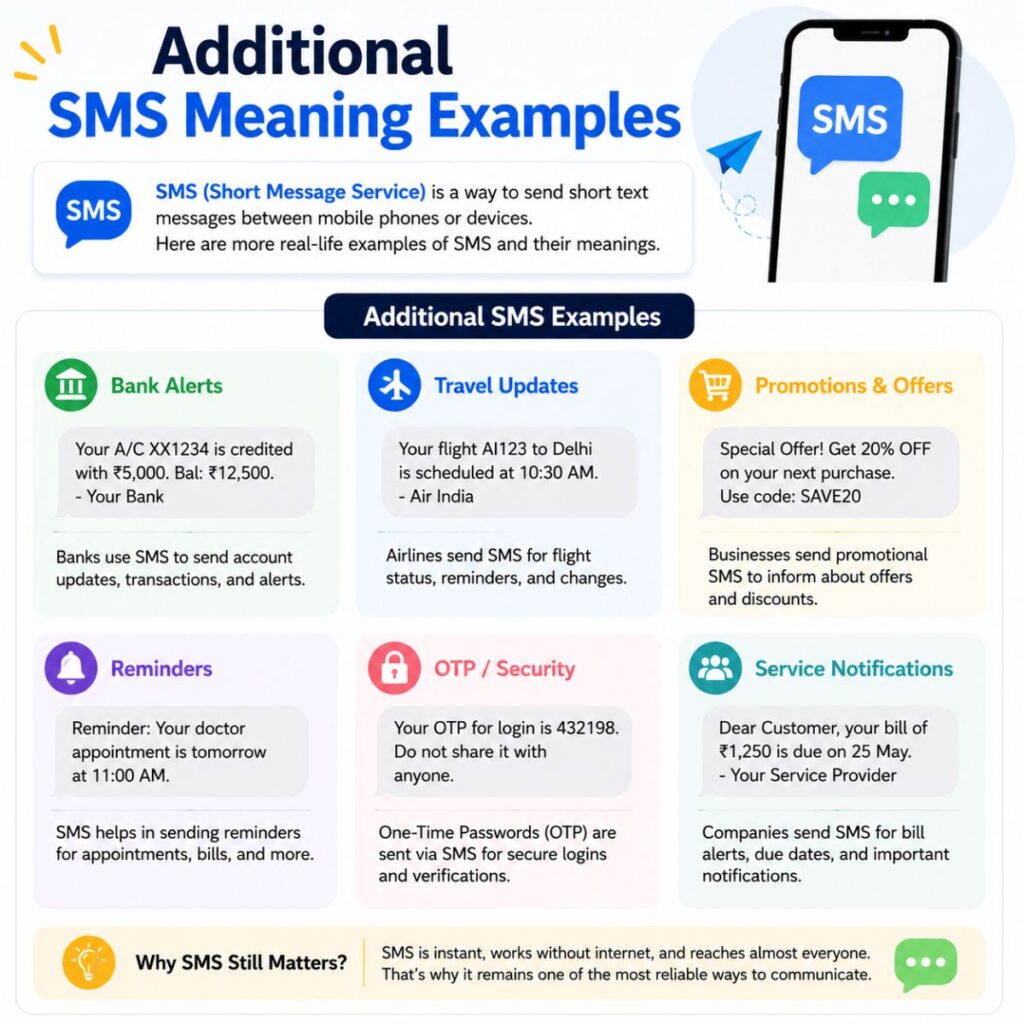
- SMS means sending short text messages.
- SMS uses mobile networks to deliver messages.
- SMS works without installing extra apps.
- SMS remains available on almost every phone.
- SMS technology has existed for many years.
- Text messaging became popular because of SMS.
- SMS helps people communicate quickly.
- Short messages make communication easier.
- SMS remains useful for alerts and updates.
- Mobile phones depend on SMS for many services.
- SMS is simple and easy to understand.
- Messages sent through carriers use SMS.
- SMS supports personal and business communication.
- Text messages continue to connect people worldwide.
- SMS remains a trusted communication method.
Frequently Asked Questions
What does SMS stand for in texting?
SMS stands for Short Message Service, which is the technology used to send text messages between mobile phones.
Is SMS the same as a text message?
Yes. Most people use the terms SMS and text message interchangeably, although SMS specifically refers to messages sent through a cellular network.
Does SMS require internet?
No. SMS works through your mobile carrier and does not require Wi-Fi or mobile data.
What is the difference between SMS and messaging apps?
SMS uses cellular networks, while apps like WhatsApp or Messenger require an internet connection.
Why do businesses use SMS?
Businesses use SMS for verification codes, appointment reminders, promotions, security alerts, and customer notifications.
Conclusion
Understanding what does text message SMS mean is much easier once you know that SMS stands for Short Message Service. It is the technology behind traditional text messaging and remains one of the most reliable ways to communicate.
Even though messaging apps have become popular, SMS still plays an important role in daily life. From verification codes and bank alerts to personal conversations and business updates, SMS continues to connect people around the world.
Learning the meaning of SMS helps remove confusion and makes modern communication easier to understand. Whether you use a smartphone or a basic mobile phone, SMS remains a simple, fast, and dependable way to send messages.
Save this guide for future reference and share it with anyone who has ever wondered what text message SMS means.

Awais Bilal is the author of Messagesfy, sharing simple and meaningful messages, quotes, and wishes to help people express their feelings easily.