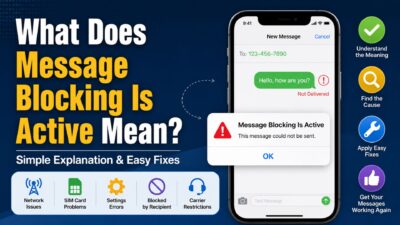
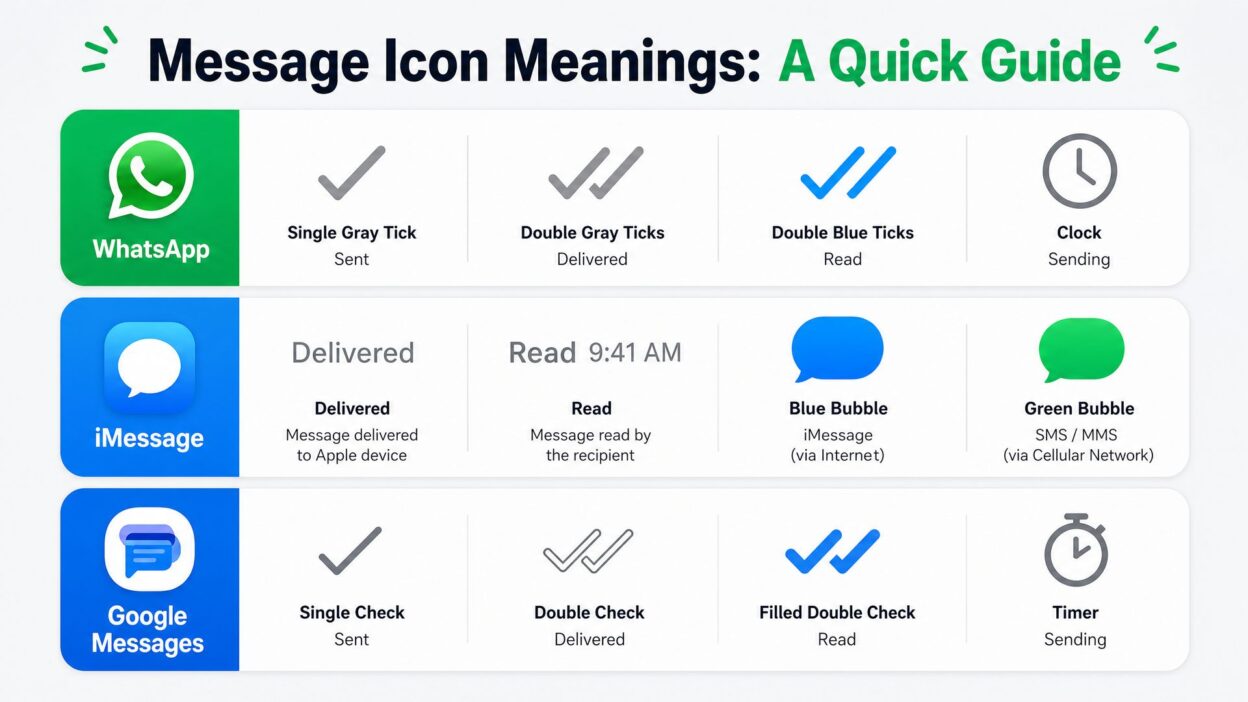
Have you ever glanced at your phone and noticed a message icon you didn’t recognize? Whether it’s a small speech bubble, an envelope, a notification badge, or a chat symbol, these icons appear countless times throughout the day. Yet, many people still wonder what they actually mean or why they suddenly change.
A message icon is more than just a simple graphic. It lets you know when you’ve received a new text, direct message, chat notification, or important communication. However, different smartphones, messaging apps, and operating systems use slightly different icons. As a result, it’s easy to feel confused when an unfamiliar symbol appears on your screen.
Fortunately, understanding message icons doesn’t have to be complicated. In this guide, you’ll learn what the most common message icons mean, where you’ll find them, and how to identify notification symbols across Android phones, iPhones, and popular messaging apps. By the end, you’ll feel much more confident whenever a new message icon appears.
Top Message Icon Examples
Below are some of the most common message icons you’ll see across smartphones, websites, and messaging apps. Although their designs may vary, they all serve a similar purpose—helping you recognize communication at a glance.
- 💬 Speech bubble icon
- 📩 Incoming message icon
- ✉️ Envelope message icon
- 📥 New message notification
- 🔔 Message alert icon
- 📱 SMS message icon
- 💭 Chat bubble icon
- 📨 Received message icon
- 📤 Sent message icon
- ✅ Delivered message icon
- ✔️ Read message icon
- 🔵 Unread message badge
- 🔴 Notification dot
- 👥 Group chat icon
- 💼 Business message icon
- 📧 Email message icon
- 🔒 Secure message icon
- 🌐 Online chat icon
- 🤖 Automated message icon
- 💡 Support chat icon
Short Message Icon Examples
These simple message icons are the ones people recognize most often. Likewise, they’re widely used across messaging apps, websites, and mobile devices.
- 💬 Chat
- ✉️ Message
- 📩 Inbox
- 📨 New message
- 📤 Send
- 📥 Receive
- ✔️ Delivered
- ✅ Read
- 🔔 Alert
- 🔵 Unread
- 🔴 Notification
- 💭 Conversation
- 📱 SMS
- 👥 Group chat
- 🔒 Secure chat
- 🌐 Online message
- 💡 Support
- 🤝 Contact
- 💬 Reply
Where You’ll Commonly See a Message Icon

Message icons appear almost everywhere in today’s digital world. Therefore, recognizing them can help you navigate apps and devices more easily.
Here are the most common places where you’ll find a message icon:
- Android Messages app
- iPhone Messages app
- Facebook Messenger
- Instagram Direct Messages
- Telegram
- Signal
- Discord
- Slack
- Microsoft Teams
- Gmail
- Outlook
- Customer support chat widgets
- Online stores
- Banking apps
- Healthcare portals
- School communication apps
- Smartwatch notifications
- Car infotainment systems
- Business communication platforms
What Different Message Icons Usually Mean
Although message icons look different from one app to another, they often represent similar actions. Therefore, understanding these symbols can make everyday communication much easier.
- 💬 Indicates an active conversation.
- ✉️ Represents a standard message or email.
- 📩 Shows a newly received message.
- 📤 Means a message has been sent.
- 📥 Indicates an incoming message.
- ✔️ Confirms the message was delivered.
- ✅ Shows the recipient has read the message.
- 🔔 Alerts you to a new notification.
- 🔵 Highlights unread conversations.
- 🔒 Represents secure or encrypted messaging.
- 👥 Indicates a group conversation.
- 📧 Refers to email communication.
- 🤖 Identifies automated or chatbot messages.
- 💡 Opens customer support chat.
- 🌐 Connects you to online messaging.
Best Message Icon Examples for Sharing
Whether you’re creating a guide, helping a friend, or designing content, these message icon examples are easy to recognize and share. In addition, they work well across social media, presentations, and websites.
- 💬 Start a conversation.
- 📩 Check your new messages.
- ✉️ Send someone a message.
- 📥 Your inbox has a new update.
- 📤 Your message has been sent.
- 🔔 You have a new notification.
- ✔️ Your message was delivered.
- ✅ Your message has been read.
- 🔵 You have unread messages.
- 👥 Join the group conversation.
- 🔒 Your chat is secure.
- 📧 Check your email inbox.
- 💭 Continue the conversation.
- 🤝 Contact us anytime.
- 💡 Chat with customer support.
- 🌐 Send an online message.
- 📱 Open your messaging app.
- 📨 A new message is waiting.
- 💬 Stay connected with friends.
- 🔔 Never miss an important message.
One-Line Message Icon Examples
These quick examples help explain what different message icons typically represent. Likewise, they’re perfect for tutorials, UI guides, or quick references.
- 💬 Chat starts here.
- ✉️ Send a message.
- 📩 New message received.
- 📤 Message sent.
- 📥 Message received.
- ✔️ Delivered successfully.
- ✅ Read by recipient.
- 🔔 New alert available.
- 🔵 Unread conversation.
- 👥 Group message.
- 📧 Email notification.
- 🔒 Secure messaging.
- 💭 Ongoing conversation.
- 🤖 Automated reply.
- 💡 Customer support.
- 🌐 Online communication.
- 📱 Mobile messaging.
- 📨 Inbox updated.
- 📢 New announcement.
- 💬 Tap to reply.
Common Message Icons and Their Uses
Although different apps have unique designs, most message icons serve familiar purposes. As a result, you’ll recognize them more quickly once you know what they represent.
- 💬 Speech Bubble – Opens chats or conversations.
- ✉️ Envelope – Represents messages or email.
- 📩 Open Envelope – Indicates a newly received message.
- 📤 Up Arrow – Shows a sent message.
- 📥 Down Arrow – Indicates an incoming message.
- ✔️ Single Check Mark – Message delivered.
- ✅ Double Check Mark – Message read or confirmed.
- 🔔 Bell Icon – Notification or message alert.
- 🔵 Blue Dot – Unread message.
- 🔒 Lock Icon – Secure or encrypted conversation.
- 👥 Group Icon – Group chat or team conversation.
- 📧 Email Icon – Email communication.
- 🤖 Robot Icon – Automated chatbot message.
- 💡 Help Icon – Customer support chat.
- 📱 Phone Icon – Mobile messaging features.
Tips for Understanding Message Icons
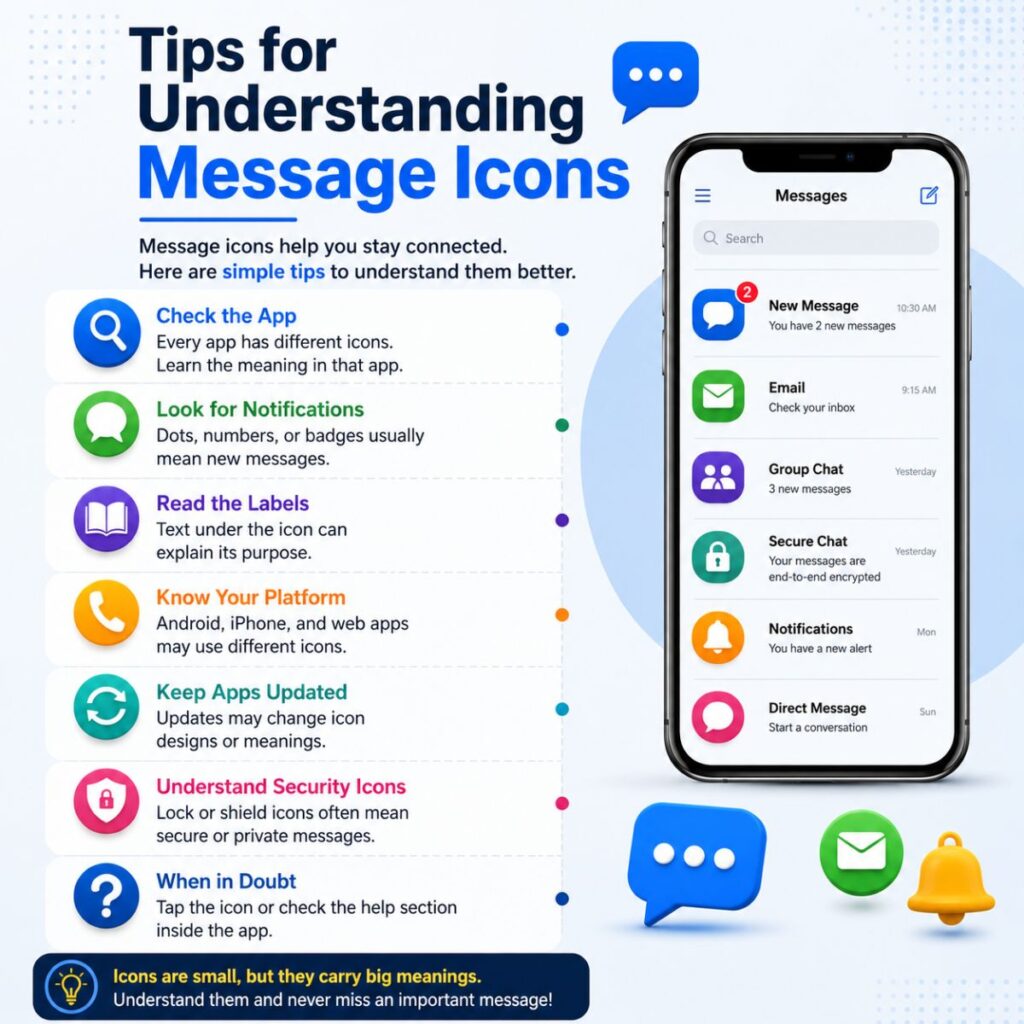
Message icons may look simple, but they often provide important information. Therefore, keeping these tips in mind can help you avoid confusion.
- Compare the icon with the app’s official documentation.
- Check whether the icon appears with a notification badge.
- Tap the icon to view additional details.
- Update your app if icons look different after an update.
- Remember that Android and iPhone icons may vary.
- Learn the difference between delivered and read icons.
- Don’t confuse email icons with SMS icons.
- Pay attention to color-coded notification dots.
- Use accessibility settings if icons are difficult to recognize.
- Look for labels beneath unfamiliar icons whenever possible.
Copy-Paste Ready Message Icon Examples
Need quick examples for a guide, presentation, or website? These are ready to use.
- 💬 Chat with us anytime.
- 📩 You have a new message.
- ✉️ Send us a message today.
- 📥 Your inbox has been updated.
- 📤 Your message was sent successfully.
- ✔️ Message delivered.
- ✅ Message read.
- 🔔 New notification available.
- 👥 Join the discussion.
- 🔒 Secure messaging enabled.
Best Message Icon Captions
Need a short caption for your website, social media post, or messaging guide? These captions are simple, engaging, and easy to understand.
- 💬 Every conversation starts with a single message.
- ✉️ Stay connected with the people who matter.
- 📩 Never miss an important update.
- 🔔 A small icon can carry big news.
- 💬 One tap opens endless conversations.
- 📱 Communication is always at your fingertips.
- 📥 Check your inbox and stay informed.
- 📤 Send your thoughts with confidence.
- 🔒 Secure messages bring peace of mind.
- 👥 Great conversations bring people together.
- 💭 Every message tells a story.
- 📧 Stay connected wherever you are.
- 💡 Help is only one message away.
- 🌐 Connect instantly from anywhere.
- 💬 Keep the conversation going.
- 🔔 Notifications keep you in the loop.
- ✉️ Messages make communication effortless.
- 📩 Your next conversation starts here.
- 📱 Stay connected every day.
- 💬 Talk, share, and stay close.
More Copy-Paste Ready Message Icon Examples
These short text-and-icon combinations are ready to use in tutorials, UI guides, websites, or customer support pages.
- 💬 Start a new conversation.
- 📩 Open your latest message.
- ✉️ Send us your questions anytime.
- 📥 Check your inbox for updates.
- 📤 Your message is on its way.
- ✔️ Successfully delivered.
- ✅ Read and confirmed.
- 🔔 You have a new notification.
- 👥 Join the group chat.
- 🔒 Your conversation is protected.
- 📧 Check your email messages.
- 💡 Contact customer support.
- 🤖 Automated response available.
- 🌐 Chat with us online.
- 📱 Open your messaging app.
- 💬 Tap here to reply.
- 📩 New message waiting.
- ✉️ Stay in touch.
- 🔔 Don’t miss important updates.
- 💬 Keep the conversation flowing.
Frequently Asked Questions
What does a message icon mean?
A message icon is a visual symbol that represents messaging, texting, chatting, or communication. It often appears as a speech bubble, envelope, or notification badge.
Why do message icons look different on Android and iPhone?
Android and iPhone use different design systems. As a result, message icons may vary in shape, color, and style while serving the same purpose.
What is the most common message icon?
The speech bubble (💬) is one of the most widely recognized message icons because many messaging apps use it to represent conversations.
What does the blue dot next to a message icon mean?
In many apps, a blue dot indicates an unread message or a conversation that still needs your attention.
Can message icons change after an app update?
Yes. Developers often refresh icon designs during app updates to improve usability or match a new visual style.
Conclusion
The message icon may seem like a small detail, but it plays a big role in everyday communication. Whether you’re sending a text, checking your inbox, joining a group chat, or responding to a notification, these icons help you navigate your digital conversations quickly and confidently.
Furthermore, understanding what different message icons represent can save time and reduce confusion across Android devices, iPhones, websites, and popular messaging apps. Instead of guessing what a symbol means, you’ll know exactly what action to take.
As messaging platforms continue to evolve, their icons may change slightly. However, the purpose remains the same—to make communication simple, clear, and efficient. Save this guide for future reference, share it with others who may find it helpful, and you’ll always know what a message icon means whenever it appears on your screen.

Awais Bilal is the author of Messagesfy, sharing simple and meaningful messages, quotes, and wishes to help people express their feelings easily.